Basílica Sagrada Familia
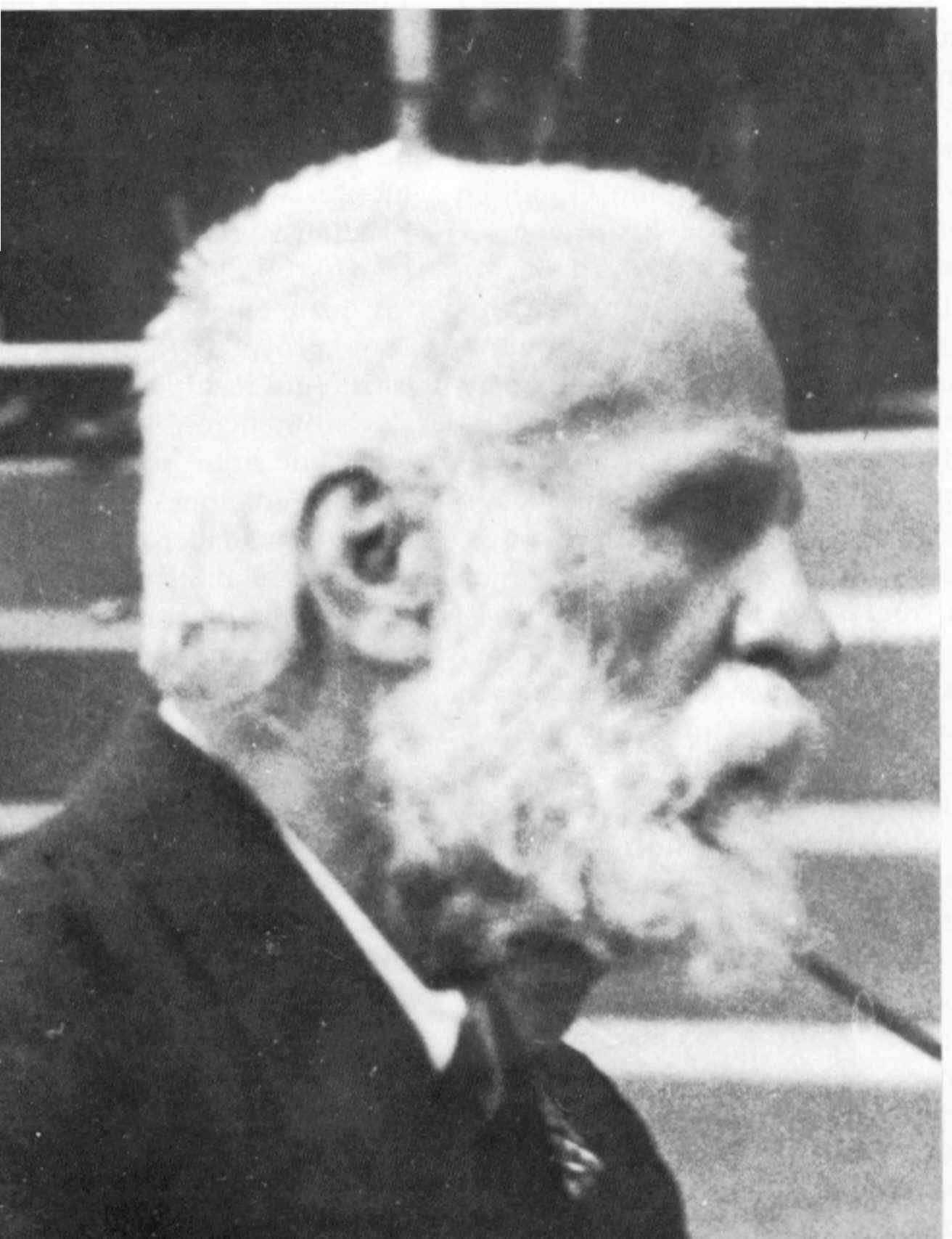
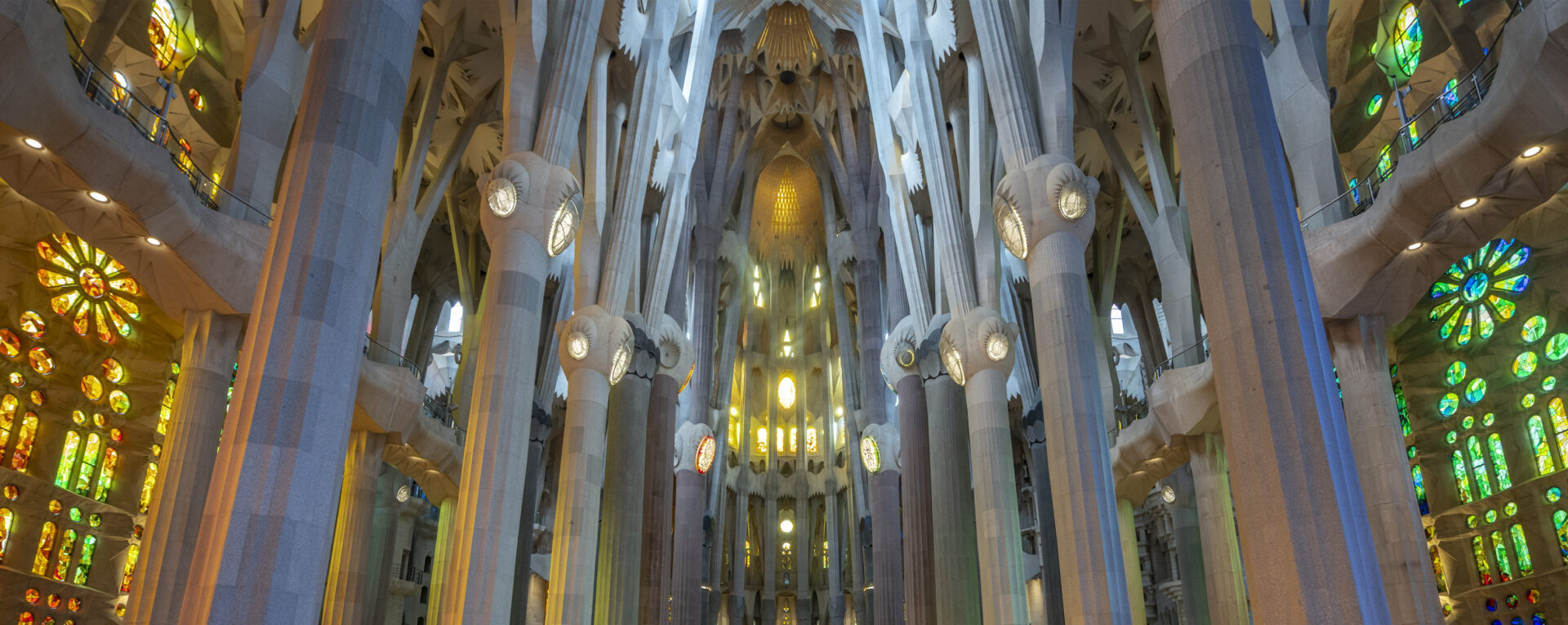
This great project is so excepcional that it has brought into being a unique process in which innovation and experimentation have led to new structural and construction solutions being developed.
Since the early 1980s, the Temple Construction Board has partnered with various universities to delve into original Temple documents and pioneer new technologies. New Zealand architect Mark Burry, who joined the board in 1979, introduced parametric modelling and devised the intricate geometric structure based on surviving documentation post the Spanish Civil War’s devastation. This significant technological innovation can also be understood through the lens of materials and concrete moulding techniques. Escofet, being a pioneer in this field, has contributed to the construction of the Sagrada Familia, where both stone and concrete seamlessly coexist.
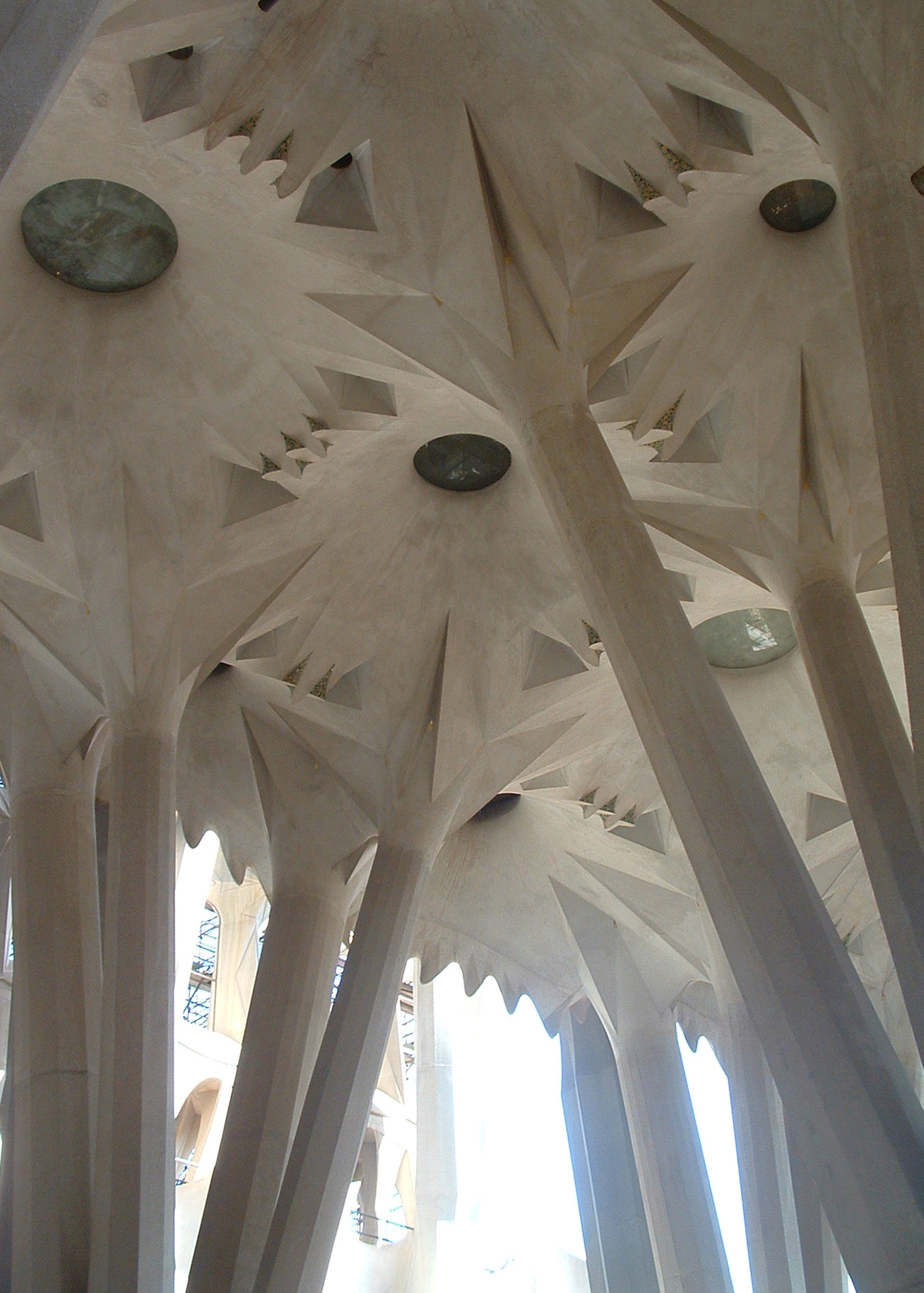
Escofet’s involvement with the Sagrada Familia commenced with the development of polyester fibre moulds to resolve intricate geometries. Naturally, when in 1996 the Temple Construction Board suggested using prefabrication technology to replicate natural stone and expedite the Temple’s construction timeline, Escofet was well positioned to initiate its collaboration with the Board. Notably, all the pieces crafted by the company are situated at the building’s height level of 17 meters.
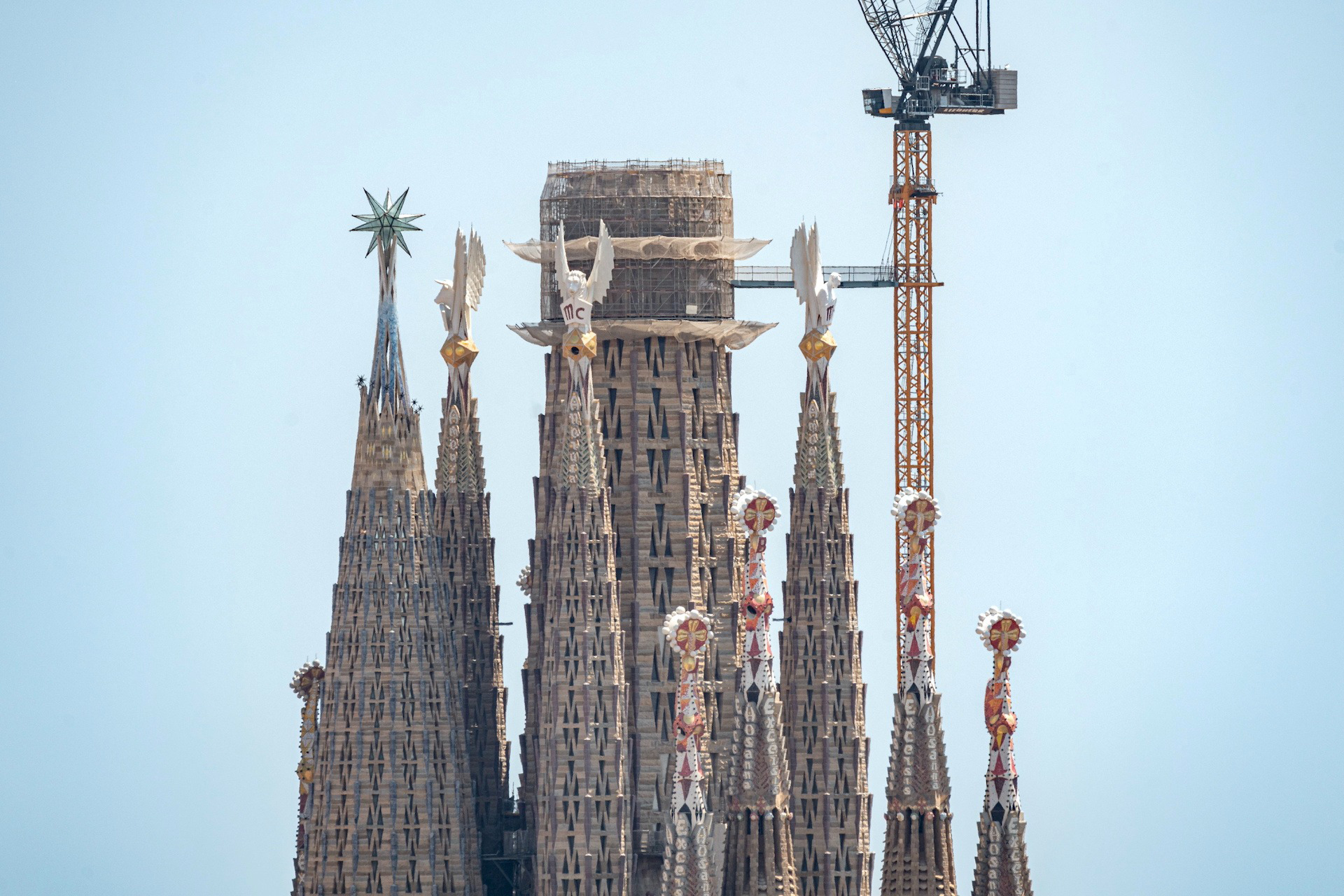
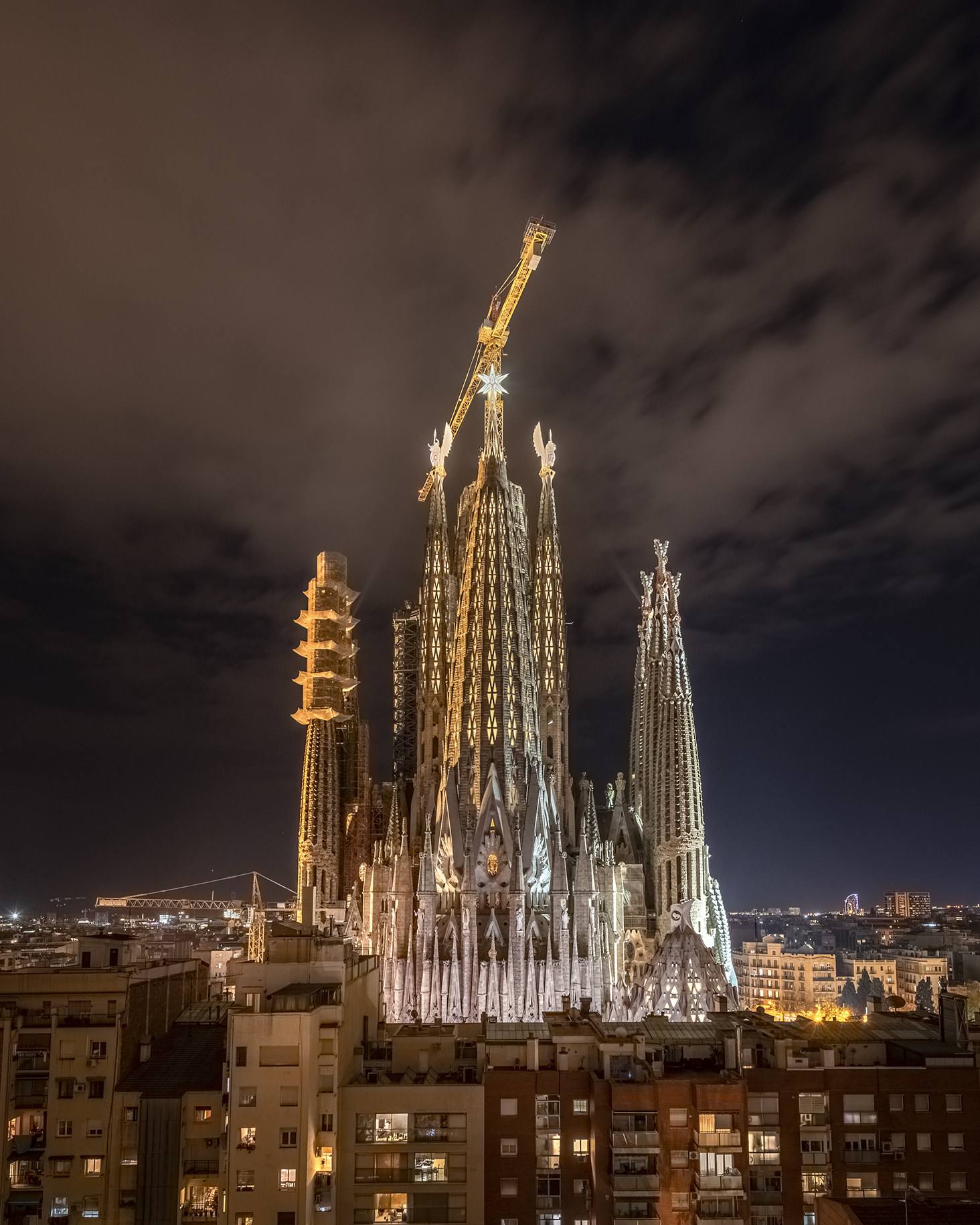
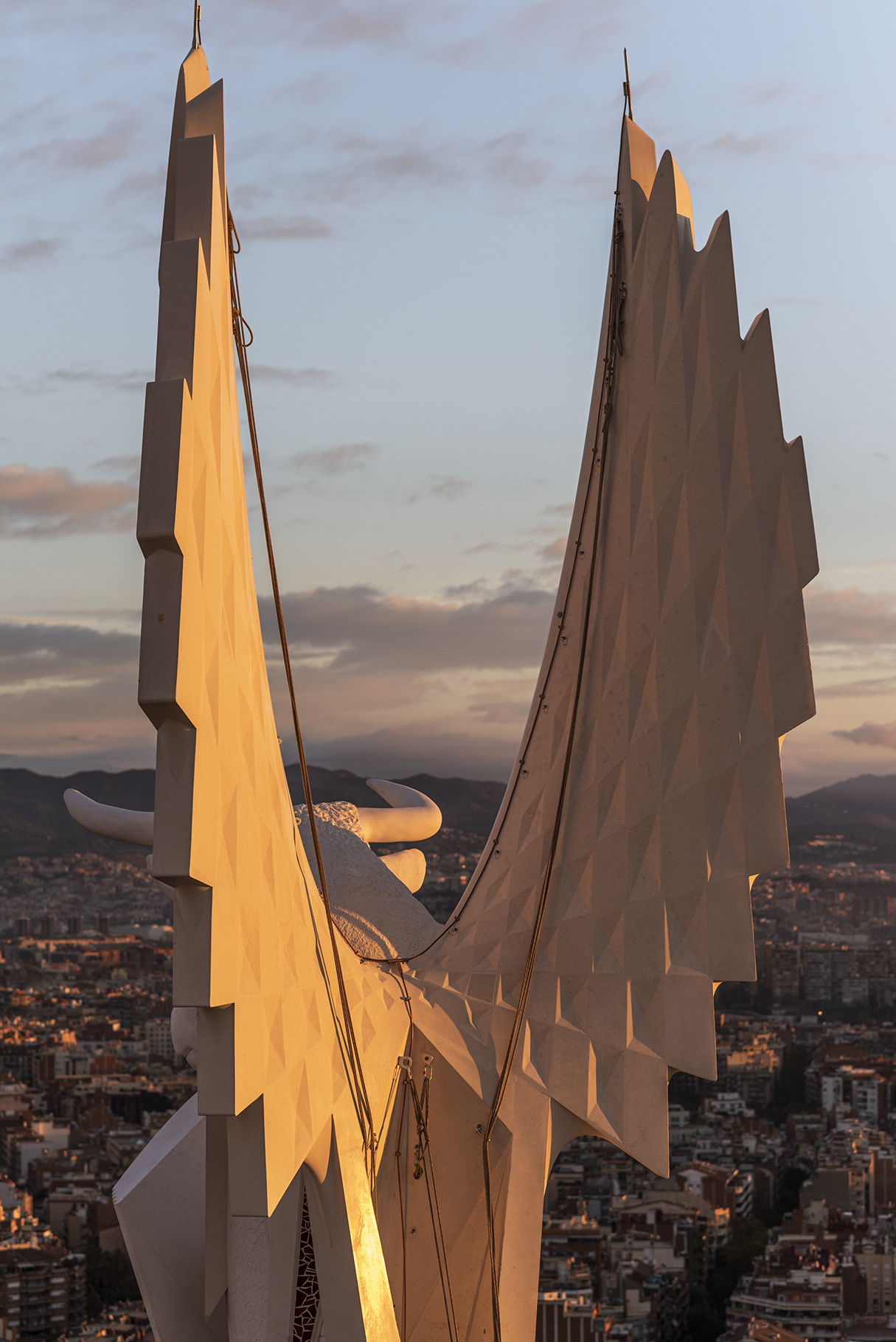
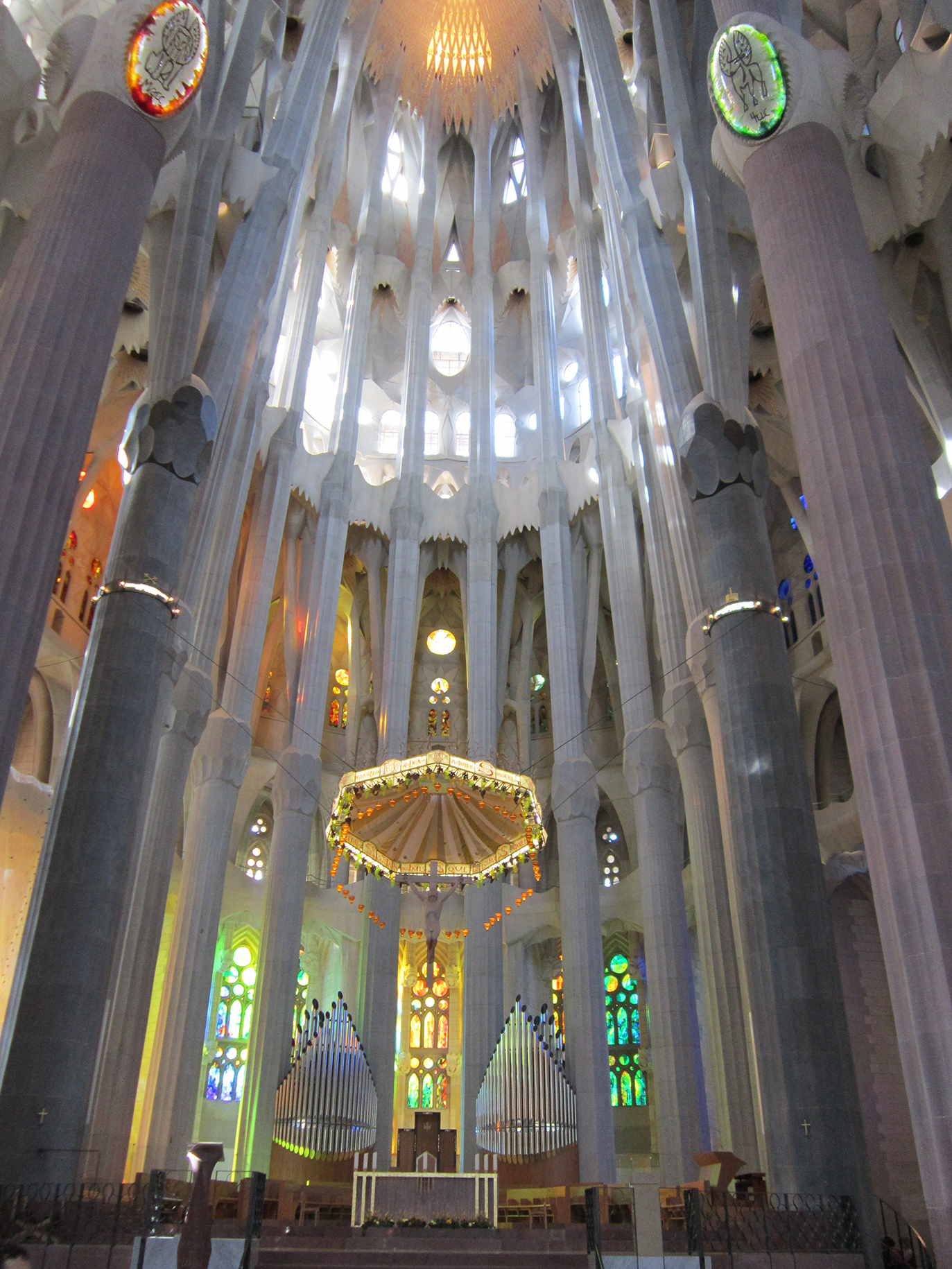
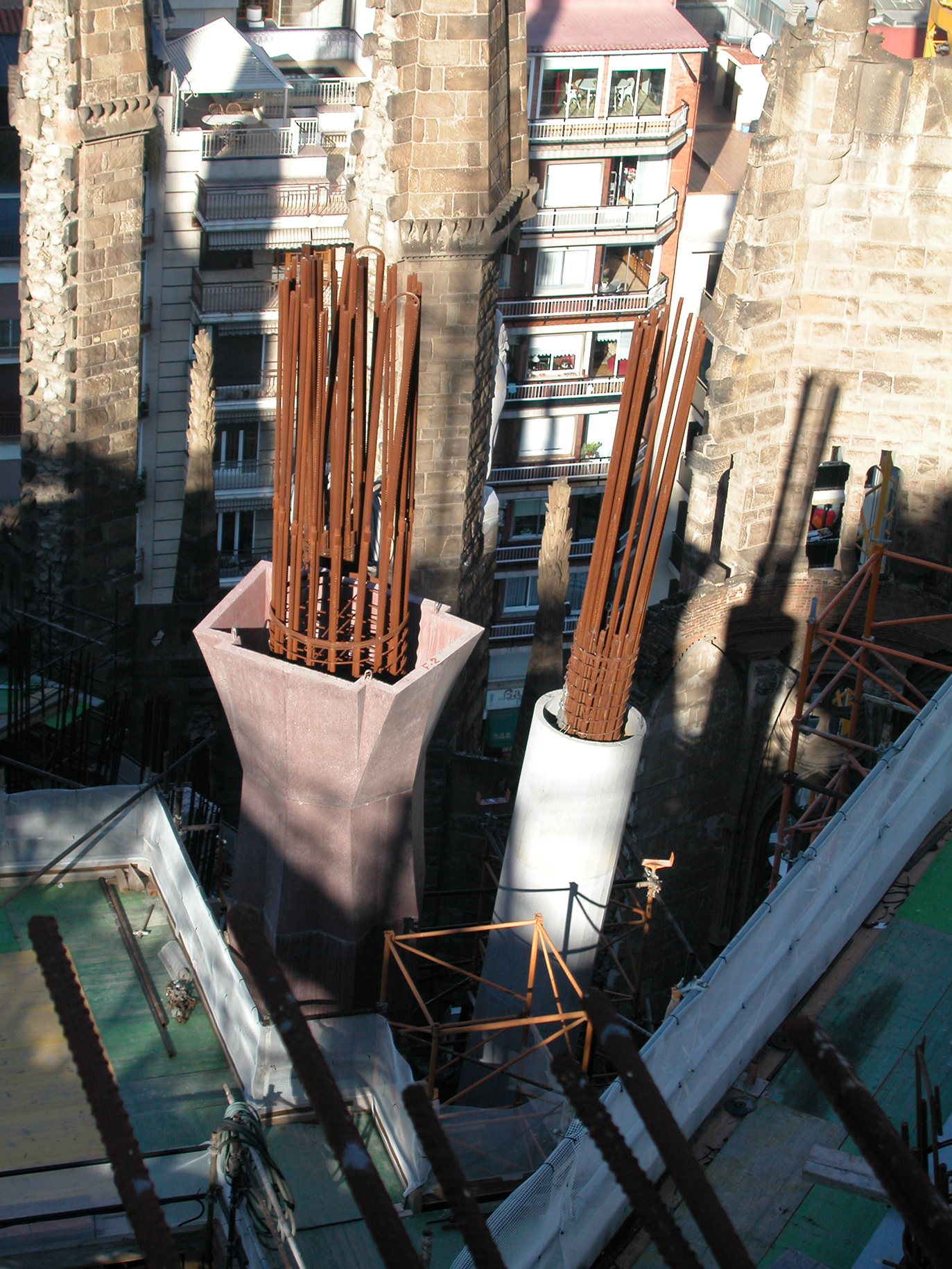
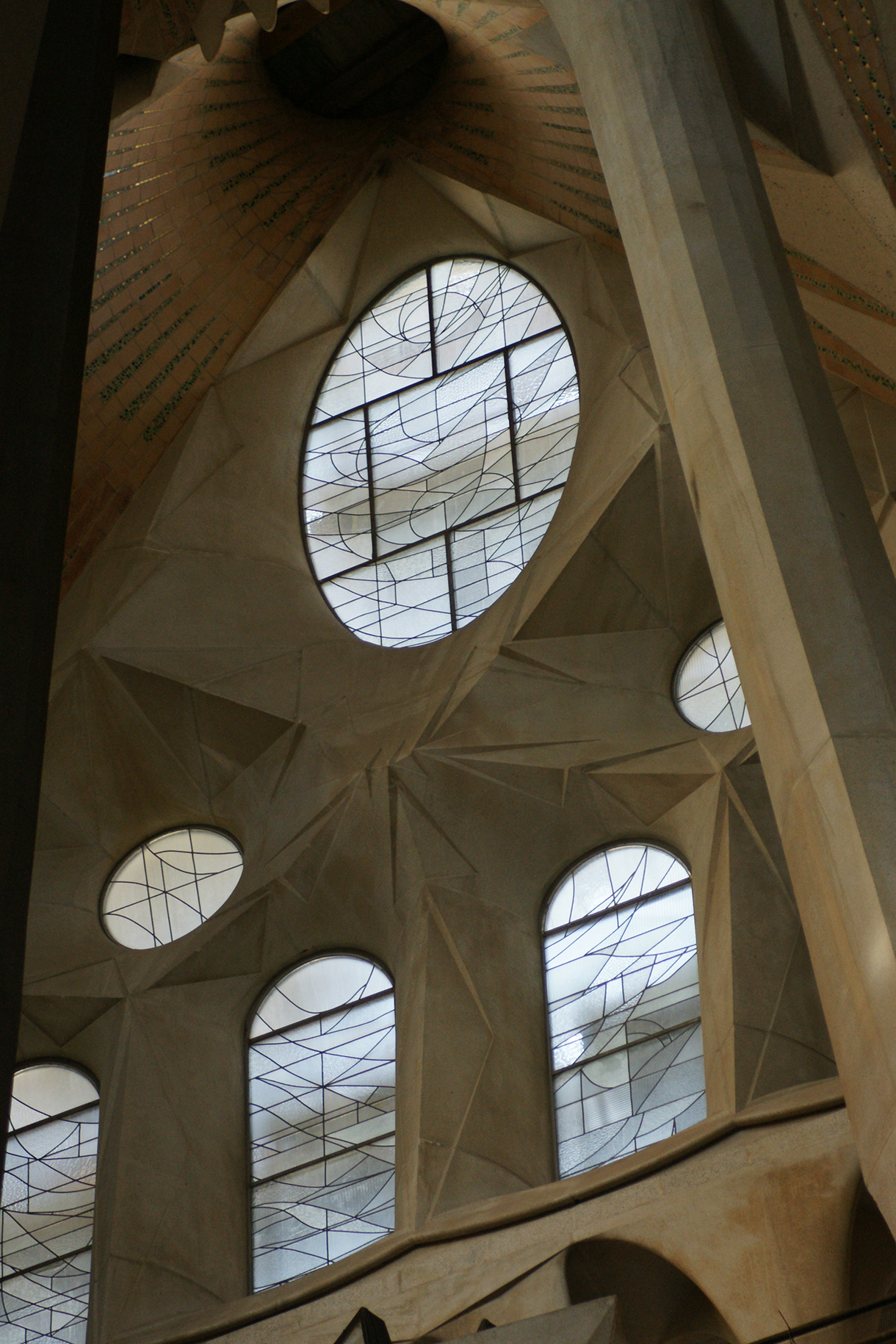
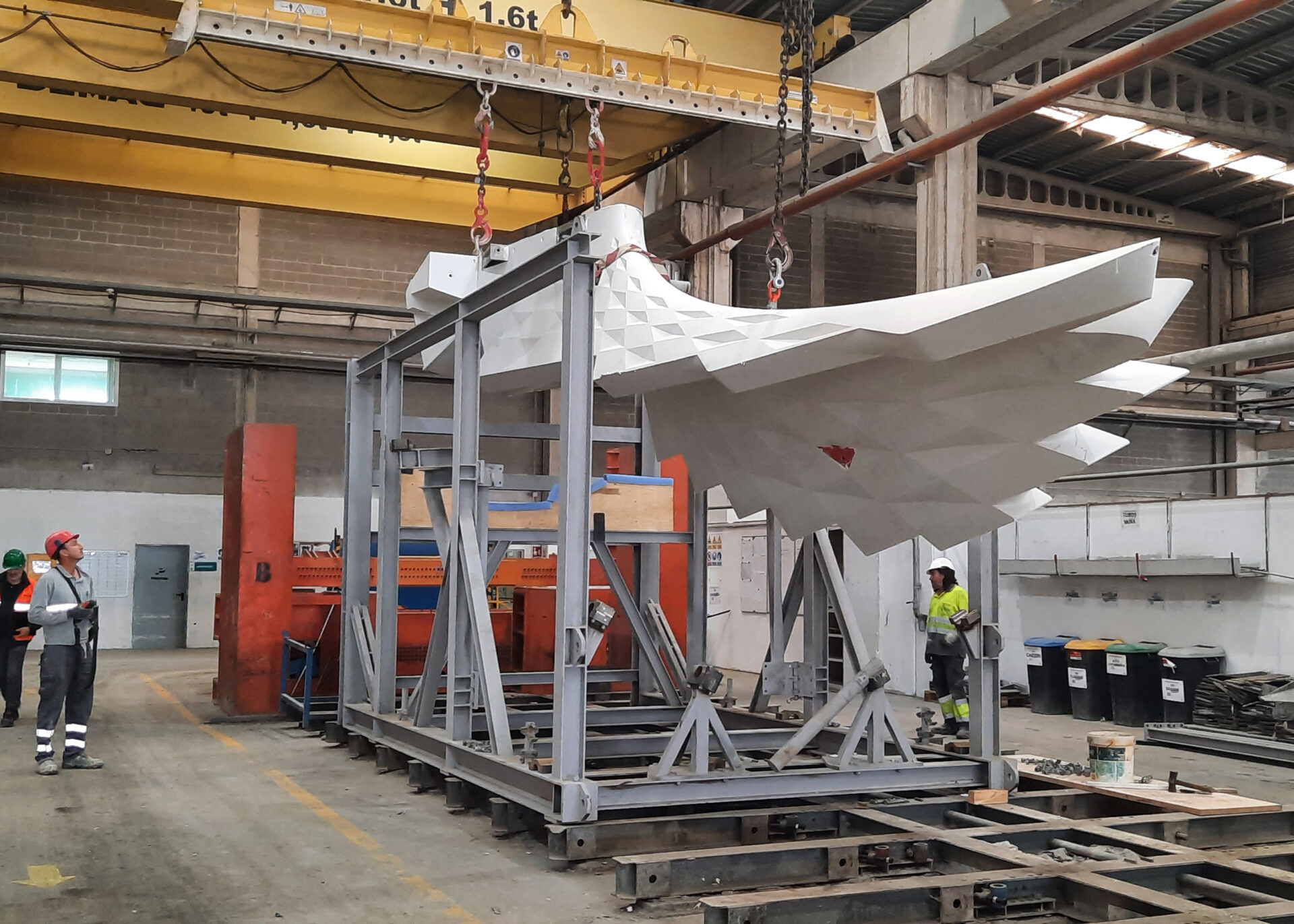
To simulate the Montjuïc stone, Escofet mixes white or grey cement with red and brown sands, along with beige limestone marble aggregates and silica. On-site acid-etching or sandblasting is applied to the pieces, thus providing the desired appearance once these techniques merge. Recently, self-compacting UHPC concretes have been incorporated into the prefabrication of iconic elements such as the interior claddings of the “Torre de la Mare de Déu” and the “Torre de Jesucrist,” which incorporate glazed ceramic pieces anchored to the post-tensioned concrete precast modules. Currently, the wings of the tetramorf figures that crown the four Towers of the Evangelists have been developed, elements over 9 meters in height and 15 tons in weight, moulded in polished white concrete. The Sagrada Familia project stands out as a continuous R&D endeavour for all associated industries. It involves ad hoc technology to create intricate shapes and volumes that demand precision in construction, surpassing the capabilities of traditional building methods. As a result, it continuously drives innovation in all related fields, pioneering new techniques and solutions.
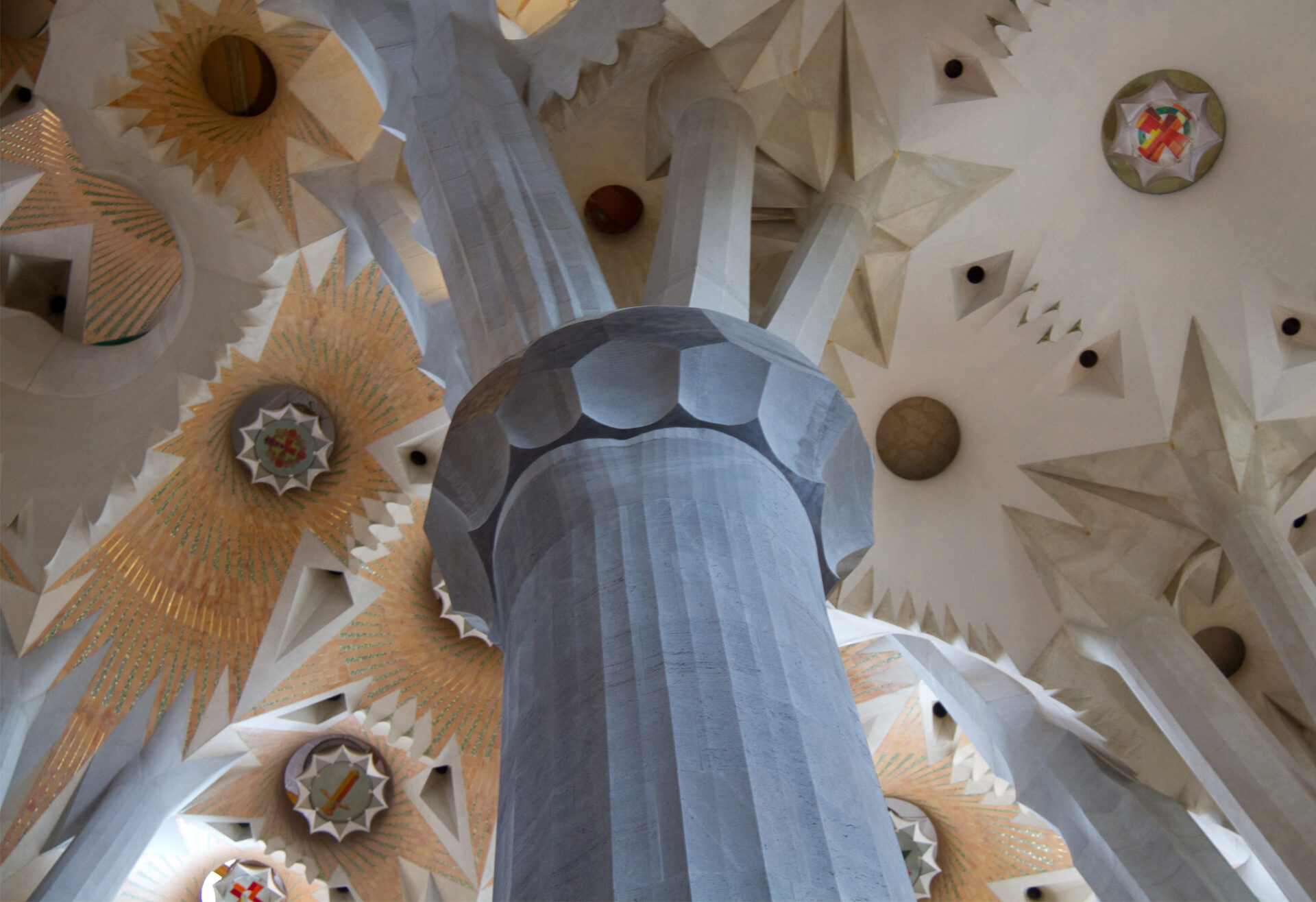
To simulate the Montjuïc stone, Escofet mixes white or grey cement with red and brown sands, along with beige limestone marble aggregates and silica. On-site acid-etching or sandblasting is applied to the pieces, thus providing the desired appearance once these techniques merge. Recently, self-compacting UHPC concretes have been incorporated into the prefabrication of iconic elements such as the interior claddings of the “Torre de la Mare de Déu” and the “Torre de Jesucrist,” which incorporate glazed ceramic pieces anchored to the post-tensioned concrete precast modules. Currently, the wings of the tetramorf figures that crown the four Towers of the Evangelists have been developed, elements over 9 meters in height and 15 tons in weight, moulded in polished white concrete. The Sagrada Familia project stands out as a continuous R&D endeavour for all associated industries. It involves ad hoc technology to create intricate shapes and volumes that demand precision in construction, surpassing the capabilities of traditional building methods. As a result, it continuously drives innovation in all related fields, pioneering new techniques and solutions.